

 Digital Transformation

 Technical Strategy Services
 Foundational Strategy Services
 Information Architecture
 Content Experience & Strategy
 Bitrix24 For Business Automation
 Software Development
 Custom Application Development
 Mobile Application Development
 E-commerce Development
 Website Development
 UI/UX Audit of Site Usability
 Website Technical Support
 Digital Marketing
 Marketing Automation Services
 Search Engine Optimization (SEO)
 Content Marketing & Copywriting
 Paid Search & PPC Management
 Social Media Marketing
 Email Marketing Services
 Research
 Brand Health Research
 Analysis of Brand Competitors
 Target Audience Analysis
 Testing of Design and Concept
 Analytics Setup & Data Analysis
 Foundational Strategy Services
 Information Architecture
 Content Experience & Strategy
 Bitrix24 For Business Automation
 Custom Application Development
 Mobile Application Development
 E-commerce Development
 Website Development
 UI/UX Audit of Site Usability
 Website Technical Support
 Marketing Automation Services
 Search Engine Optimization (SEO)
 Content Marketing & Copywriting
 Paid Search & PPC Management
 Social Media Marketing
 Email Marketing Services
 Brand Health Research
 Analysis of Brand Competitors
 Target Audience Analysis
 Testing of Design and Concept
 Analytics Setup & Data Analysis

 Expertise Overview
 Digital Transformation
 Software Development
 Digital Marketing
 Research
 Products Overview
 Solutions Overview
 Real Estate CRM
 Hospitals CRM & Bookings
 Retail Digital Transformation
 Marketing Automation
 Tasks & Projects
 HR Automation
Bitrix24 and UAE Data Protection: A Practical Checklist
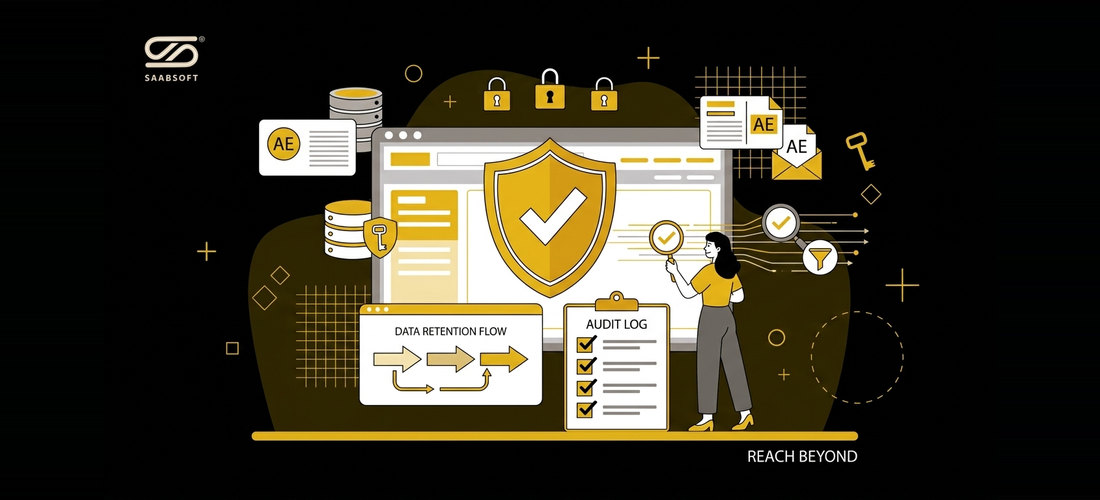
Your CRM is the largest store of personal data you hold. A practical, operational checklist for configuring Bitrix24 responsibly under the UAE PDPL.
A CRM is the largest collection of personal data most businesses hold. Names, phone numbers, nationalities, employment details, sometimes passport or Emirates ID references — all of it sitting in a system that dozens of staff can access and export.
The UAE Personal Data Protection Law sets obligations around how that data is collected, used, stored and transferred. This is a practical checklist for configuring Bitrix24 UAE responsibly. It is operational guidance rather than legal advice — your counsel should confirm how the law applies to your specific circumstances.
Know what you are actually holding
Most organisations underestimate this, because data accumulates by default. Before configuring anything, inventory what is in the system.
- Which fields hold personal data, including free-text notes — which is where the most sensitive material usually ends up, unlabelled.
- Whether any of it is sensitive: health information, biometric data, or anything revealing protected characteristics.
- Where it came from, and what the person was told at the time.
- How long you have held it, and whether there is any reason to still hold it.
- Attachments. Scanned passports and Emirates IDs sitting in deal attachments are a common and significant exposure.
Capture consent so it can be evidenced
Consent you cannot demonstrate is functionally the same as consent you never obtained. The record matters as much as the agreement.
- Store consent as structured fields — what was agreed, when, and through which mechanism — not as a note.
- Separate consent by purpose and channel. Agreeing to be contacted about an enquiry is not agreeing to a newsletter, and agreeing to email is not agreeing to WhatsApp.
- Record withdrawal with the same rigour as the original consent, and make it take effect immediately across every sequence.
- Keep web form submissions linked to the exact wording shown at the time, because that wording changes.
Restrict access to what each role needs
Blanket access is the default configuration in most CRM deployments and the hardest thing to justify if anything goes wrong.
- Configure record-level permissions by role so agents see their own records rather than the entire database.
- Restrict export rights deliberately. A CSV export is the most common route for data to leave a company.
- Limit who can view attachments containing identity documents.
- Review permissions when people change role, and remove access the same day someone leaves.
- Enable audit logging, and have someone actually look at it periodically.
Decide where the data lives, and document why
Bitrix24 Dubai Cloud hosts data in the vendor's data centres; On-Premise puts it where you install it. Both can be appropriate — what matters is that the choice is deliberate and documented.
- If personal data leaves the UAE, establish and record the lawful basis for that transfer.
- Check whether your sector regulator imposes localisation requirements beyond the general law.
- If you operate within DIFC or ADGM, those free zones have their own data protection regimes.
- Confirm what your own client contracts commit you to — these frequently say more than the law requires.
Retention: stop keeping everything forever
Indefinite retention is a decision, even when nobody made it consciously. Data you no longer need is pure liability: it cannot help you and it can be breached.
- Set a retention period by record type and write it down.
- Automate review so records reaching the threshold surface for a decision rather than being silently kept.
- Delete or anonymise rather than archiving indefinitely — archived data is still data you hold.
- Remember backups. A record deleted from the live system and retained in backups is still retained.
Be able to answer a data subject request
Individuals have rights over their data. The practical question is whether you could respond to a request within a reasonable period without a scramble.
- Can you locate everything you hold about one person, including notes and attachments?
- Can you export it in an intelligible format?
- Can you correct it across every place it appears?
- Can you delete it, including from integrated systems and mailing tools?
- Is there a named person responsible for handling such requests?
Practical hardening in Bitrix24 UAE
- Enforce two-factor authentication for every user, without exception for senior staff.
- Restrict administrator rights to as few people as is workable.
- Review connected applications and integrations — each one is a route data can take out.
- Use a dedicated role for integrations rather than a personal account that will eventually be deactivated.
- Test your backup restore. An untested backup is a hope.
A sensible starting sequence
- Inventory what you hold, including free-text and attachments.
- Fix permissions and export rights — the fastest meaningful risk reduction available.
- Add structured consent capture to every intake route.
- Agree retention periods and automate the review.
- Document the data flow so you can describe it when someone asks.